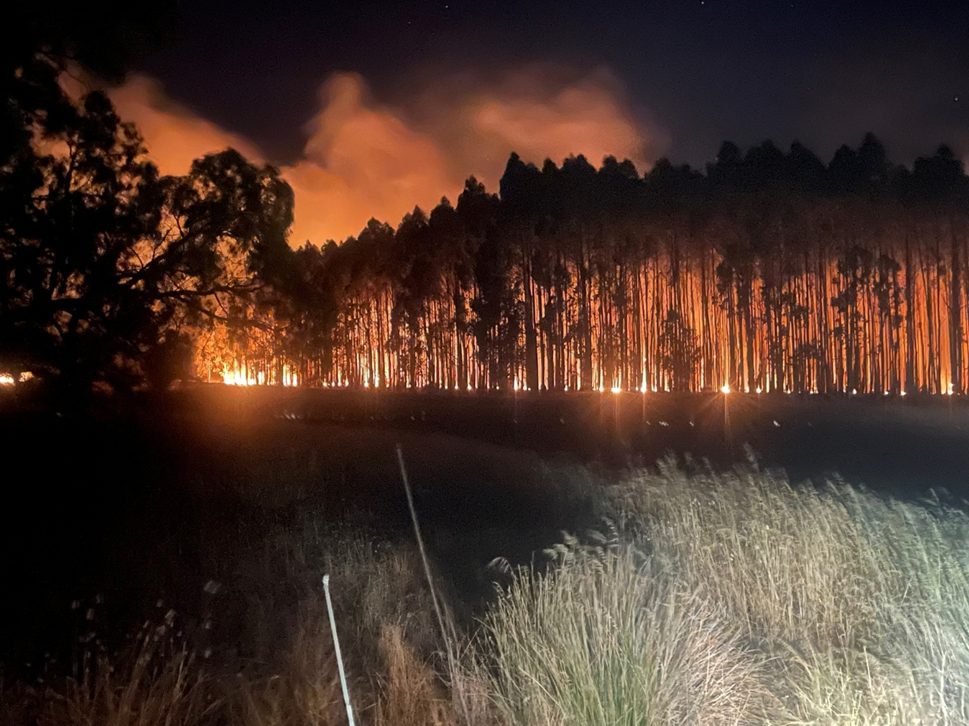


Australian Bluegum Plantations is highlighting the role of adaptive silviculture and long-term landscape thinking in the recovery of its Callendale plantation estate following the devastating January 2022 bushfire in South Australia’s south-east.
The fire, in the heart of the Wattle Range region of South Australia, impacted more than 3800 hectares of ABP plantation, presenting significant challenges including extensive tree loss, erosion challenges, and sensitive post-fire environmental conditions. Recovery required more than a standard recovery and replanting response.
ABP’s silviculture forester Neil Turner led the development and delivery of the complex salvage program, recovering 277,000 m3 of timber over an 18-month operation. The program required careful sequencing and on-ground decision making to navigate winter seasonal constraints to recover as much fibre as possible without compromising site conditions.
“This fire event burnt almost 100 per cent of the stands, wiping out everything in its path,” Mr Turner said. “These 16-year-old trees were more than 30 metres tall, and the flames were well above the canopy, it was enormous. With strong winds, the fire raced across the landscape. During mop-up it was clear the salvage task would be challenging and would require significant planning and coordination.”
Beyond salvage, ABP’s re-establishment program prioritised land recovery, environmental protection and long-term productivity. Rather than rushing to replace trees, the focus was on restoring healthy plantation systems.
“After a fire of this scale, the land tells you what it needs,” Mr Turner said. “In some areas, that meant slowing down, managing erosion risk, and allowing time for conditions to stabilise before re-establishment. In others, it meant trialling different establishment techniques to better suit the post-fire environment.”
The Callendale response deliberately moved away from a one-size-fits-all approach. Planting was delayed in selected areas, site preparation methods were adapted, and lessons learned were embedded into future operations. This evidence-based approach balanced immediate recovery pressures with the long-term health of soils, waterways, and surrounding landscapes.
The recovery program also strengthened future fire preparedness, including the establishment of additional fire-water resources within the local drainage network to improve resilience against future events.
ABP Chief Executive Officer Darren Shelden said the work at Callendale reflects a broader shift in how the company approaches plantation recovery after major disturbance.
“Neil’s leadership at Callendale demonstrates that good silviculture is as much about stewardship as it is about production,” Mr Shelden said. “The decisions made following the
fire prioritised land capability, environmental outcomes, and long-term value. This is exactly the kind of thinking our industry needs as it adapts to a more challenging climate.”
The Callendale recovery has since become a reference point within ABP, informing post-fire rehabilitation approaches across the estate and reinforcing the importance of flexibility, innovation, and on-ground expertise.
“As foresters, we’re working with long timeframes. Success isn’t just measured by survival rates at planting, but by how well the landscape performs years down the track. Callendale has been about setting that foundation properly,” Mr Turner said.
ABP continues to monitor and refine its silvicultural practices at Callendale, with lessons from the recovery program contributing to ongoing improvements in environmental management and plantation resilience across the business. This includes construction of a purpose-built fire resource dam to support future firefighting defence.